How to Practice Music?
Learning music does not need to feel overwhelming. At Nashville Music School™, we approach practice like a game. Every musician can choose a role, equip the right tools, understand the rules, and level up skills efficiently.
Part 1: Pick Your Role
Every band or ensemble thrives when each musician knows their role. To gamify practice, think of yourself as a Tank, Healer, or DPS:
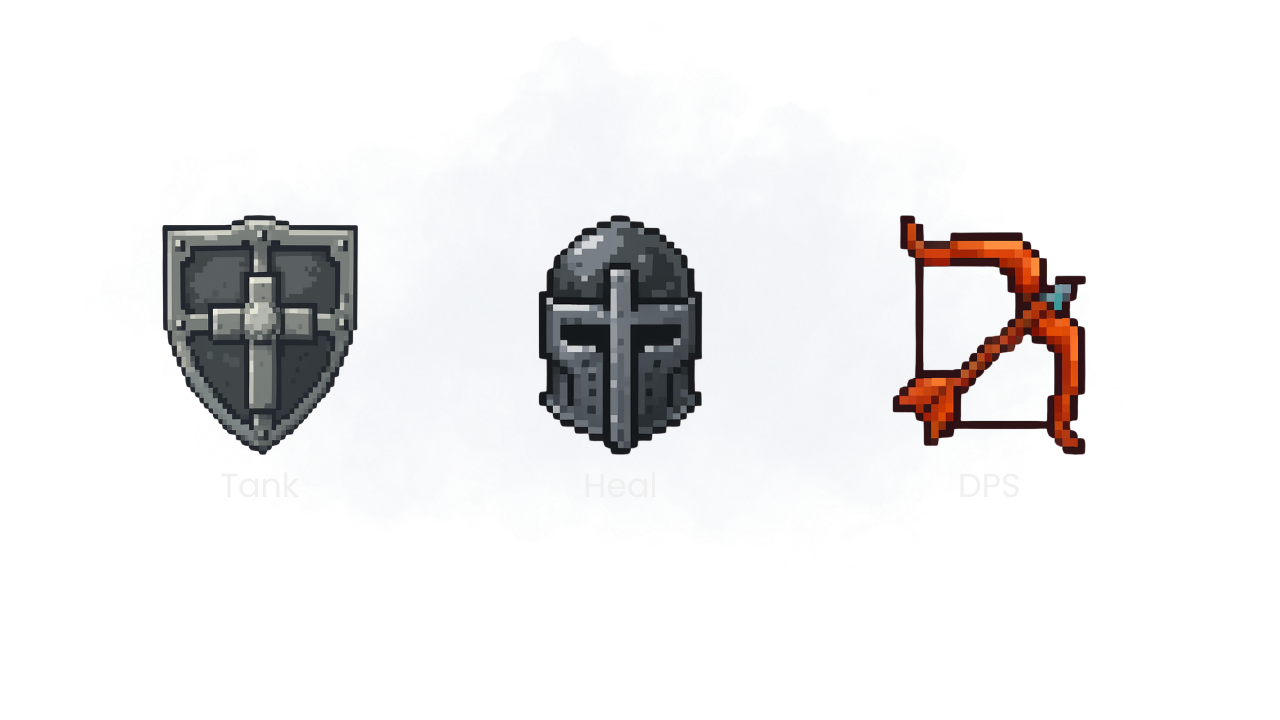
Tank – The Foundation: Warrior/Knight
Drummers, pianists, and acoustic bassists provide the backbone of any piece. They anchor rhythm and harmony, creating stability for others to shine. In gaming terms, Tanks are the Knight class: tough, reliable, and essential.
Heal – The Ambiance: Paladin/Cleric
String sections and choir vocalists shape the atmosphere and tone. They fill gaps, smooth transitions, and enhance emotional impact. Healers are like Clerics: supporting and elevating the performance around them.
DPS – The Lead: Scout/Ranger
Electric guitarists, saxophonists, violinists, lead vocalists, and auxiliary keys/synths carry melodies, riffs, and solos. They are Scouts: fast, expressive, and attention-grabbing.
True Bypass: RPG
ROLE-BASED MUSIC MISSIONS DESIGNED TO LEVEL UP YOUR MUSICIANSHIP
Select Your Path
Each role tests a different musical instinct. Choose the path that matches the way you lead a room.
Step 1: Pick a Role
Identify which part of the ensemble fits your personality and skill set. Are you drawn to rhythm, texture, or leading with flair?
Step 2: Choose Your Weapon
Each role has instruments that best suit its responsibilities. Tanks wield drums or bass; Healers, strings or vocals; DPS, lead instruments. Spend time exploring how your chosen instrument interacts with others.
Step 3: Learn the Standard Meta
Understand the typical patterns, fills, and techniques used in your role. Drummers learn grooves, pianists work on harmonic patterns, and guitarists study riffs and licks. This forms the foundation for improvisation.
Step 4: Level Up
After mastering basics, start experimenting. Tanks can vary dynamics, Healers can create richer textures, DPS can add unexpected solos. Practice with intention, noting how your part affects the ensemble.
Part 2: Learn the Language of Music
Music becomes simpler when you understand its language.
Nashville Numbers: Simplify all 12 keys into number systems. A song in C major, for example, can be read as I-IV-V, making transposing effortless.
Chord Structures: Know major, minor, dominant, and diminished chords. This builds your harmonic intuition.
Rhythm and Notation: Learn sixteenth notes, syncopation, and rhythmic dictation. Understanding subdivisions improves timing and enables you to play complex grooves accurately.
Mastering these fundamentals allows you to read, play, and improvise music without memorizing endless patterns.
Part 3: Practice with Tools
Effective practice relies on focused tools and exercises.
NMS Metronome: Work on rhythm at any tempo. Start slow, then increase speed to build precision.
Articulation and Control: Every note or drum hit matters. Drummers use pads, pianists practice scales deliberately, and instrumentalists can tap rhythms on tables to internalize beats.
Active Listening: Analyze recordings to hear chord changes, melodies, and stylistic details. Compare pieces to recognize common patterns.
Repetition with Intention: Practice should be deliberate, not just time-based. Focus on weak areas, challenge yourself, and measure progress.
Leveling Up
Combine these practices. A drummer mastering syncopation improves the band’s groove. A guitarist understanding chord functions enhances improvisation. Every musician grows faster when they integrate tools, theory, and focused exercises.